
Why Dantherm Cooling Develops Our Own Controllers
Every cooling system relies on a controller, but not every controller is designed for the application it serves. Some manufacturers build their cooling equipment around commercially available controllers. Others develop controllers specifically for their own equipment. The way a controller is developed influences more than just the basic operation of a cooling system. The influence also extends to items such as diagnostics, serviceability, communication and further development to meet customers’ changing needs.
For more than 30 years, Dantherm Cooling has been following the second strategy for controlling cooling systems. Instead of using off-the-shelf controllers for our cooling equipment, we have developed our own controllers that are tailored to specific requirements of each Dantherm Cooling unit, and our customer’s needs.
Dantherm Cooling has been developing our own controllers since the 1990s and is now on our tenth generation of air conditioner controllers and third generation of heat exchanger controllers. According to Rick Schmidt, Dantherm Cooling’s Chief Technology Officer, the reason is straightforward: “Off-the-shelf controllers typically have too much or too little functionality for our products or what our customers are looking for.”
Designed for the Equipment It Controls
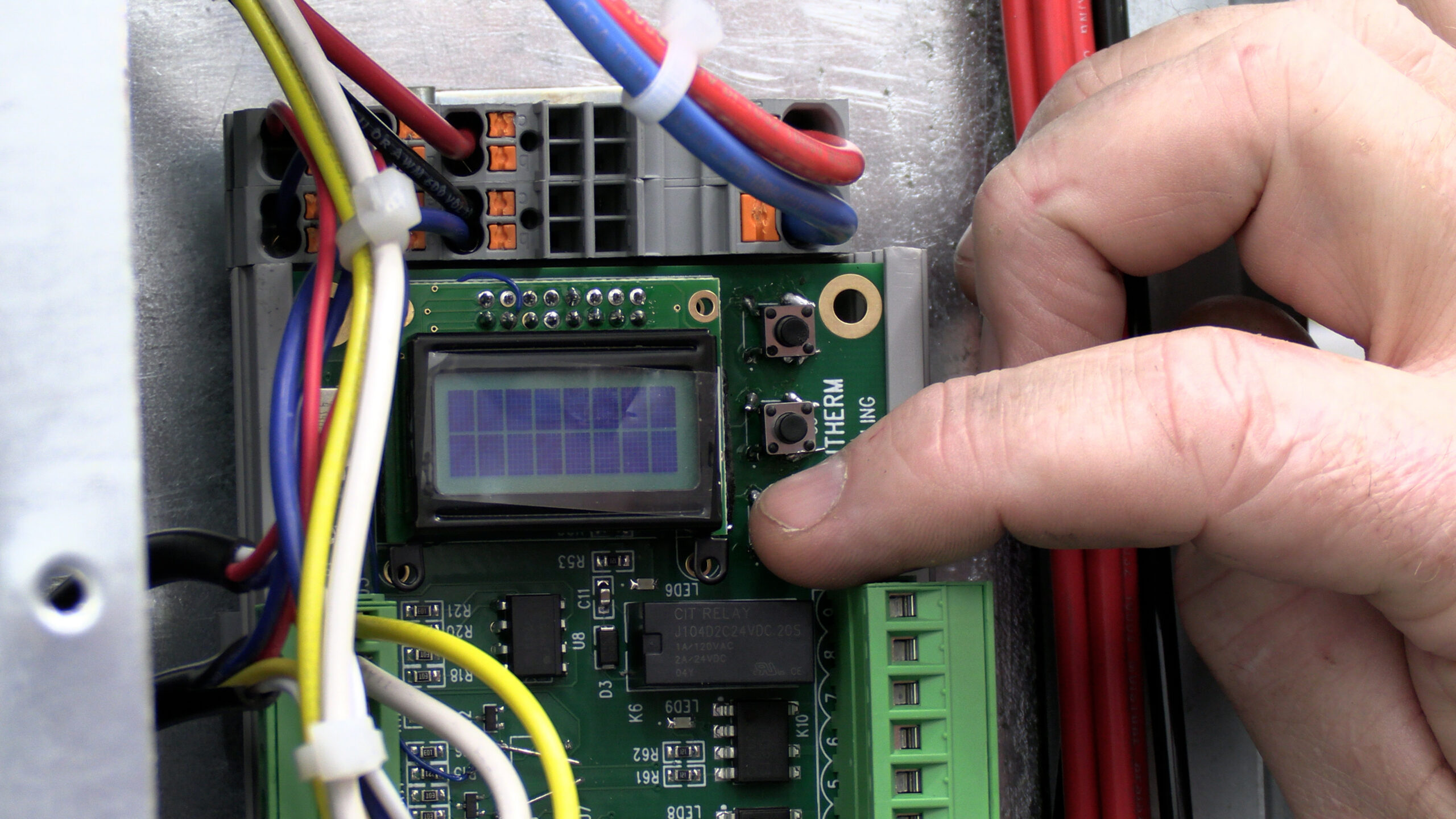 We develop controllers specifically for our own equipment, allowing functionality to be tailored to the application rather than adapting to fit a generic controller. Customers receive the features they need without unnecessary complications.
A controller serves as the brain of a cooling system. It turns the unit on and off, manages heating and cooling setpoints, monitors system operation, generates alarms and records operating data. In many mission-critical applications, it also allows the equipment to operate autonomously, giving customers the ability to monitor their cooling systems remotely without needing personnel onsite.
Engineered Ownership Means Faster Problem Solving
Every Dantherm Cooling controller is developed by our own engineering team, including both the hardware and the software. That gives engineers complete control over how the controller functions, how it evolves, and how quickly improvements can be implemented.
Rick explains that, “one of the biggest advantages is not being dependent on another company’s priorities. If an issue arises with an internally developed controller, Dantherm Cooling engineers can investigate the root cause and prioritize a solution using their own resources.” With third-party controllers, that process can often depend on another manufacturer’s development schedule.
Built With Real-World Service in Mind
Engineering ownership also extends beyond the office. Our engineers have spent time in the field observing how equipment operates and how service technicians interact with it. Those experiences have influenced every new generation of controllers, improving operation, diagnostics and overall serviceability while making the equipment easier to use and maintain.
Better Data. Better Visibility. Better Service.
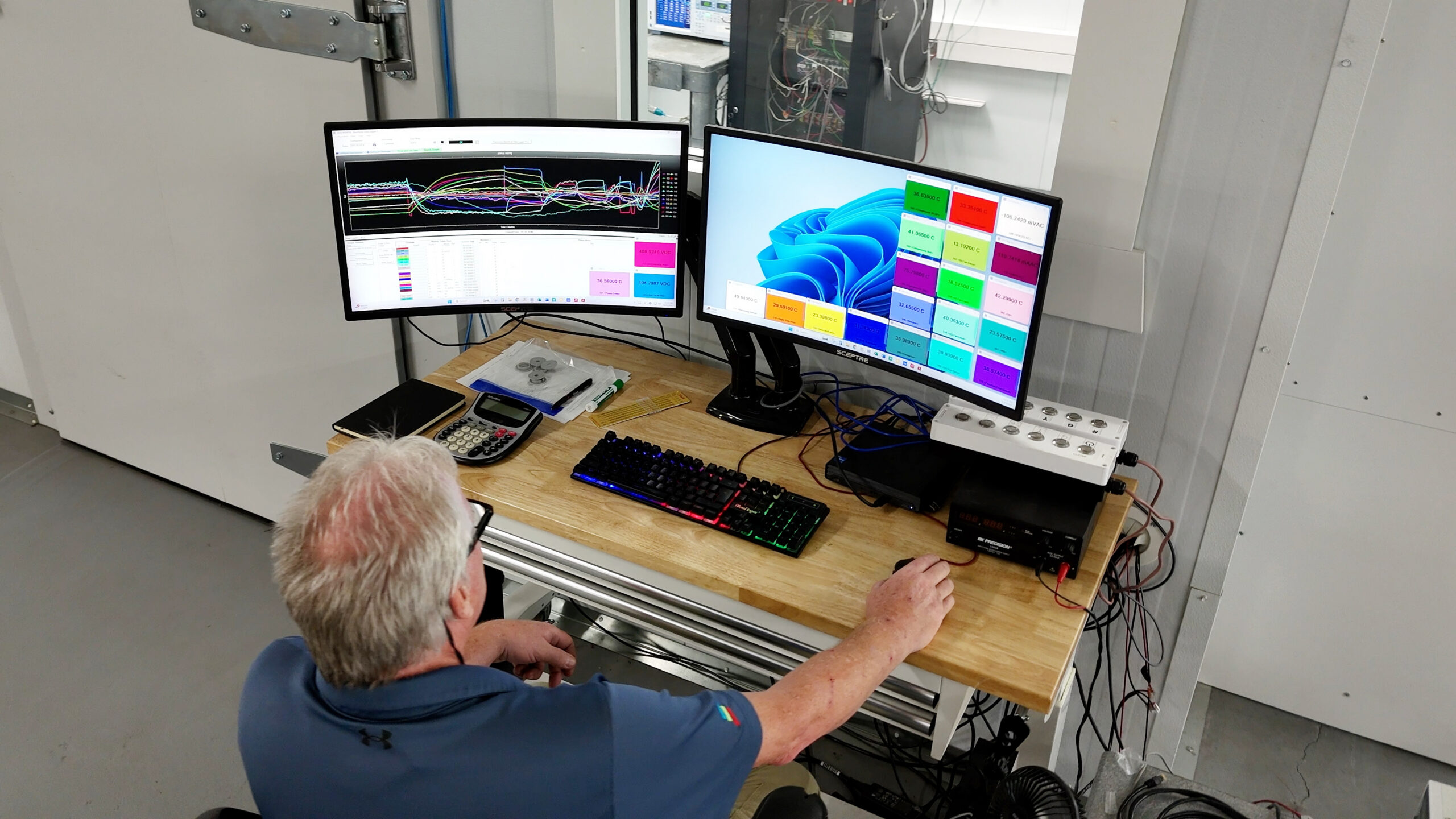 For many customers, the greatest value of a controller is more than just being able to operate the cooling system, it’s providing useful and meaningful data on how that system is performing. Dantherm Cooling controllers continuously monitor operating conditions, generate alarms and record historical operating data that can be communicated back to a network operating center. Customers can monitor remote equipment, review system performance and identify potential issues without traveling to the site.
Service technicians will find the operating history of a remote-controlled site of equal value. Thus, before visiting a site, a service technician can find out whether a fan, a sensor or any other component is failing and then arrive at the site prepared with the necessary spare parts and with full knowledge of the possible cause(s) of any failure(s).
Three Decades of Controller Innovation
Controller technology has been changing rapidly during the last 30 years. Early generations of air conditioners were using modem communications, whereas today’s controllers are communicating via Ethernet and/or Modbus networks, allowing for much higher processing power, extended diagnostic capabilities and better operational visibility.
Even as customer expectations have changed, Dantherm Cooling has managed to implement improvements to the controllers. Digital displays have long since replaced simple dials, service-friendly connectors have been added to make maintenance easier, and networking capabilities have been greatly expanded to provide greater insight into the performance of equipment. In each generation of our units, the controllers have been developed using the latest technology yet remain compatible and are supported in the long term wherever possible.
Built for What Comes Next
We will continue to advance the technology in our air conditioner and heat exchanger controllers and further satisfy the demands of the market, including greater intelligence and remote access, while at the same time ensuring the required level of cybersecurity for this type of mission critical equipment.
Although the technology has evolved greatly, the engineering philosophy of our controllers has remained unchanged. This philosophy is to design a controller for the specific application rather than the other way around. This has been the basis for the development of the last ten generations of air conditioner controllers, as well as the three generations of heat exchanger controllers. The next generation of cooling technology will also be designed around this principle.
If you are looking for a cooling solution designed around the needs of your application, contact us today to discuss your next project.